17 years in the same group, but never the same job : Jean-Baptiste Thomas (E99) of CEO d’Amazon France

[This translation was generated automatically]
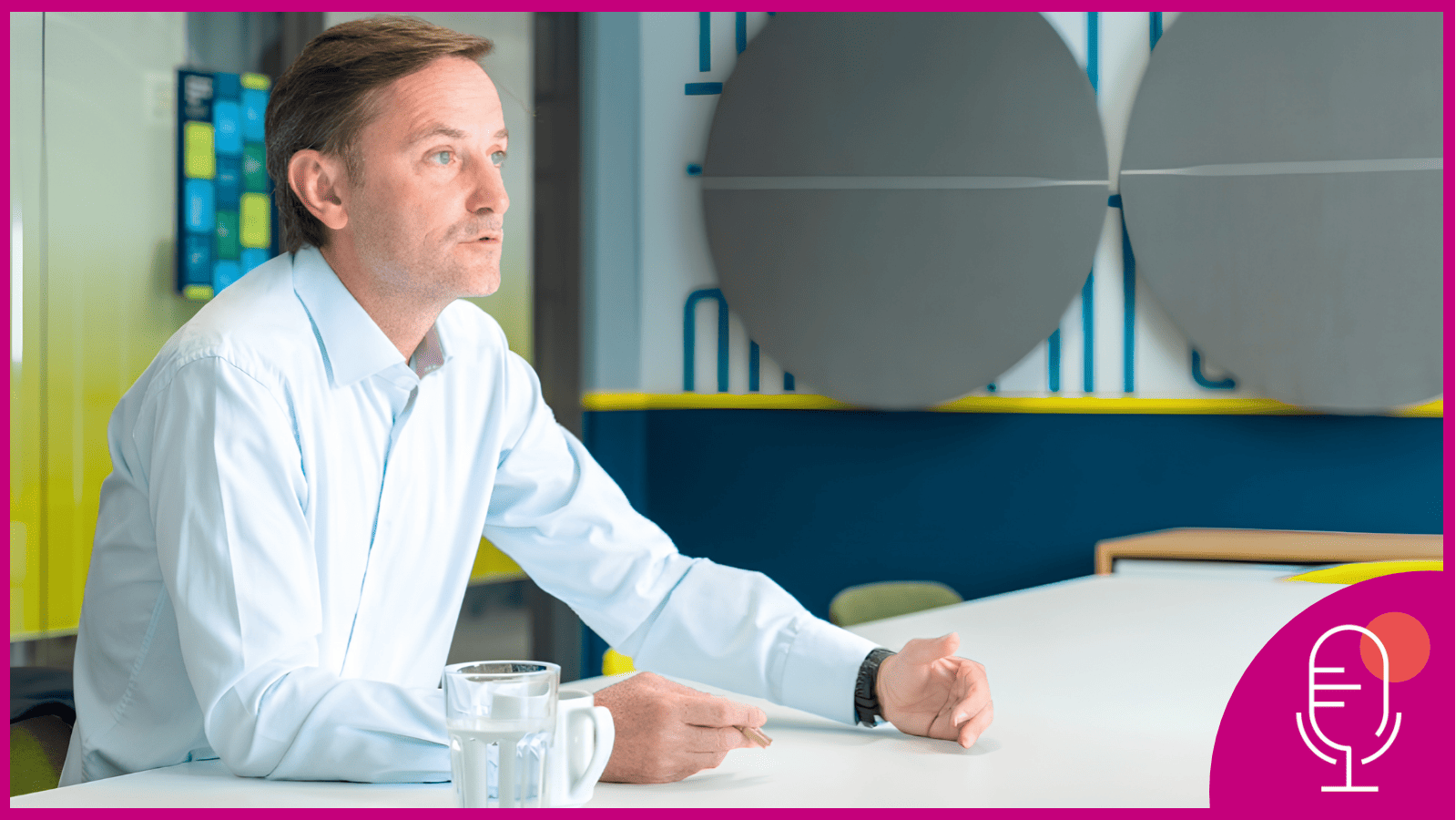
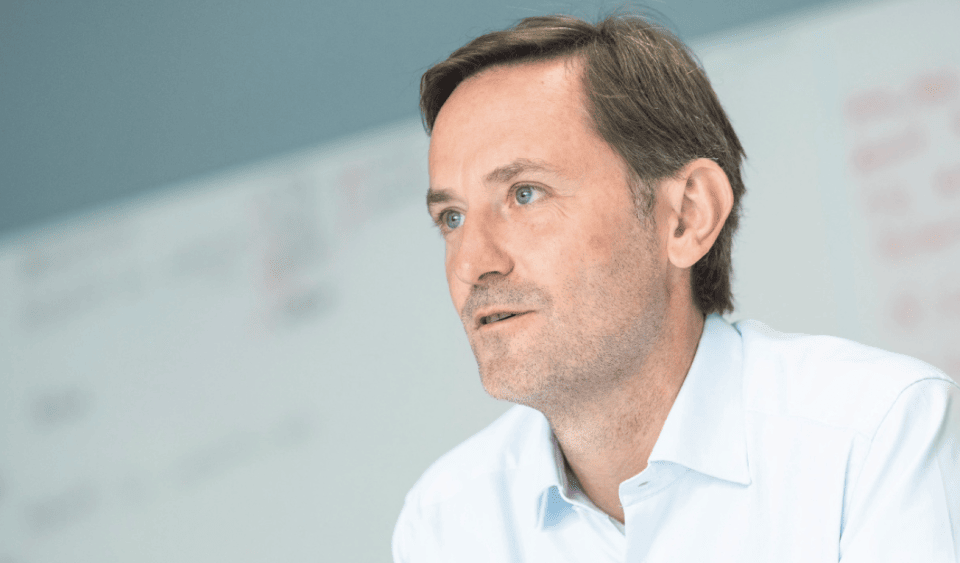
Jean-Baptiste Thomas (E99) became Managing Director of Amazon France in March 2026, while retaining his European responsibilities for consumer electronics. An entrepreneur, former BCG consultant and then Chief Financial Officer at eBay, he joined Amazon in 2009, when the company was still relatively unknown in France. He reflects on seventeen years of transformation, a distinctive corporate culture and the conviction that guides him: helping customers save money without compromising on service quality, local presence or carbon footprint.
Reflets Magazine: Before Amazon, you were an entrepreneur, a consultant at BCG and then Chief Financial Officer at eBay. What connects these career changes?
Jean-Baptiste Thomas: Curiosity and the desire to learn. I joined a business start-up project during my final year at ESSEC in 1999, at a time of extraordinary excitement surrounding the Internet. The venture lasted five years, during which we experienced the bursting of the dot-com bubble. We had built a company with around forty employees and approximately €17 million in turnover. It was a respectable achievement, but a long way from the great success stories of the time. When you start a business at a young age, you learn an enormous amount, but in a rather unusual way: you have no manager, nobody to assess your performance or tell you whether you are making the right decisions. You rely heavily on intuition, learning by doing and confronting reality. I then wanted to discover other, more structured environments so that I could continue developing. That desire to learn is probably the common thread running through my career.
RM: Was that entrepreneurial venture already in the digital sector?
J.-B. Thomas: Yes. Initially, our business was very tangible: street-based vending machines dispensing video cassettes and later DVDs. But from the outset, we wanted to use digital technology to simplify the customer experience: allowing people to reserve a film online before collecting it from a machine. That obsession with removing friction for customers was already there. We had also introduced a revenue-sharing model with publishers. For a blockbuster, you might need fifty copies during the opening weekend but only a handful a few weeks later. Purchasing all that stock made the business model difficult to sustain financially. By converting part of that fixed cost into a variable cost, we could considerably expand our range. We were convinced that video would eventually move towards digital distribution. As is often the case with new technologies, we had simply overestimated the speed of change in the short term and underestimated its scale in the long term.
RM: What did that first experience teach you that neither business school nor consulting could have taught you?
J.-B. Thomas: Pragmatism and a sense of responsibility. Our machines were automated dispensers and, in the early days, we sometimes had to repair them ourselves. I sometimes had to leave dinner with friends or take my future wife to repair a machine on a Saturday evening instead of going to a restaurant. While many of my fellow graduates were starting careers in consulting or large corporations, I occasionally found myself standing in front of a broken-down machine. But the real lesson lay elsewhere. When you run a business, you are responsible for a team and a profit and loss account. At twenty-five, with cash flow under pressure, responsibility becomes very real. You have to pay salaries and bills at the end of the month and find solutions when something goes wrong. Running a business seven days a week also teaches you that problems do not choose when to arise. It is an irreplaceable education in the realities of business.
RM: After BCG, you moved into an operational role at eBay. What were you looking for when you left consulting?
J.-B. Thomas: I loved BCG, particularly its analytical rigour and the exposure it gave me to very different companies and industries. It was almost the exact opposite of my first years as an entrepreneur: after five years with very little external feedback, I was asked during my interview whether I could cope with being assessed every three months. It was exactly what I wanted! That regular feedback also reassured me that I had not wasted those first five years. That environment taught me a great deal. But I also realised that what I truly enjoyed was running a business, managing teams and being responsible for a profit and loss account. After almost four years, I could not see myself becoming a partner. So I joined eBay to return to an operational role. That experience was shorter. A reorganisation would have meant moving to Bern and, at the same time, an opportunity arose at Amazon. In 2009, that decision surprised many people around me: eBay was a very established brand, whereas Amazon did not yet have the profile it enjoys today. What attracted me was the project, the long-term vision and the idea of systematically building everything around the customer.
RM: You joined Amazon in 2009. Seventeen years with the same company is almost unusual these days. What has kept you there?
J.-B. Thomas: First and foremost, a deep alignment with the company's culture. At Amazon, the leadership principles are not simply displayed on walls: they genuinely shape decisions, performance assessments and the way we work. Customer obsession, for example, is not just a slogan. A single dissatisfied customer's feedback can be enough to make us question a metric that the entire team considered excellent. Data is central, but it must always stand up to the test of reality. There is also a very strong culture of accountability. You are expected to look beyond your own area of responsibility and feel accountable for the collective outcome. I found the intensity of my entrepreneurial years combined with the rigour I had acquired in consulting. Finally, the company has undergone enormous changes and has allowed me to regularly change responsibilities, roles and countries. As long as you continue learning, being challenged and working with teams that push you to improve, you do not feel the need to leave.
RM: You have changed roles, product categories and countries several times within Amazon. What has driven those decisions?
J.-B. Thomas: I am quite drawn to environments that I have not yet mastered. Launching Fresh in the United Kingdom and then Japan, discovering the marketplace business model, taking on European responsibilities for a new product category: each time, you have to learn quickly, ask lots of questions and accept that some of your assumptions may need to be challenged. I really enjoy that phase. It is uncomfortable, of course, but that is precisely what helps me move forward. That is also why, after seventeen years at Amazon, I have never really felt that I was doing the same job twice.
RM: What has been the most important lesson from those years?
J.-B. Thomas: The first is that when taking on new responsibilities, you have to resist the temptation to provide answers too quickly. You must first listen, ask the right questions and accept that you do not know everything. The second lesson concerns decision-making. At Amazon, we distinguish between " one-way door " decisions, which are difficult to reverse and therefore deserve more consideration, and "two-way door" decisions, which are reversible and should be made quickly. In a large organisation, the risk is treating every decision as though it were irreversible. Knowing when to investigate further and when to move faster is essential.
RM: Isn't there a tension between the start-up mindset and the weight of a large organisation?
J.-B. Thomas: Of course, and that tension is actually embedded in our leadership principles. "Bias for Action" encourages us to move quickly, particularly when decisions are reversible. "Insist on the Highest Standards" requires us to maintain exceptionally high standards, while "Deliver Results " calls on us to achieve results. These principles can sometimes pull in different directions. A leader's role is not to choose one at the expense of the others, but to know how to balance them. The larger the company becomes, the more important that balance is: preserving speed and an entrepreneurial mindset without compromising on the standards and accountability that come with our size.
RM: You have retained your European responsibilities alongside your role as Managing Director of Amazon France. Why, and how do you manage both?
J.-B. Thomas: The two roles complement each other. For just over four years, I have been responsible for consumer electronics across Europe: smartphones, PCs, televisions, video games, musical instruments and more. It is a highly operational role covering an entire continent. Managing Amazon France is almost the opposite: you have to be a generalist. Every issue concerns you, whether it involves customers, employees, public authorities, local communities or our partners. They are therefore two different perspectives. One allows you to develop deep expertise in a particular business across several countries; the other requires you to understand the full range of challenges facing a business in one country. Each enriches the other.
RM: What do you see as the main challenges facing Amazon France over the next five years?
J.-B. Thomas: Our priority is to continue investing in local proximity to better serve customers in France. This includes our logistics network. We are opening three new sites this year, near Lyon, Chartres and Beauvais, and two more next year near Nantes and Mulhouse, while modernising our existing network. This proximity generates several benefits at once. First, it enables us to deliver an ever-wider selection of products more quickly: in 2025, we delivered 170 million items to Prime customers on the same day or the following day. For local communities, it means sustainable jobs, with more than 8,000 new permanent positions created, significant tax revenue for local authorities and a contribution to local economic development. Finally, bringing stock closer to customers reduces the distances travelled by parcels. The opening of our warehouse near Lyon, for example, reduced the distance travelled by our parcels by 31%, saving 117 grams of CO2 per delivery. That is the whole point of proximity: serving customers better, creating value in local communities and reducing transport distances. The challenge for the coming years is to continue making progress on all three fronts simultaneously.
RM: Amazon's customer experience is already considered highly sophisticated. Can it still be reinvented?
J.-B. Thomas: I wouldn't necessarily call it reinvention. Some expectations never change: twenty years from now, just as twenty years ago, customers will still want low prices, a wide selection and fast, reliable delivery. What changes is how we meet those expectations. AI is now opening up possibilities that would have been simply unimaginable a few years ago. Take product searches. With a catalogue containing millions of items, a traditional search engine often assumes that you know fairly precisely what you are looking for. With Rufus, our AI-powered shopping assistant, you can ask: "I'm looking for a PC for my fifteen-year-old teenager, who isn't always particularly careful and mainly needs it for schoolwork", then continue the conversation to refine your choice. AI can also summarise thousands of customer reviews to quickly highlight a product's main strengths and limitations. With Amazon Lens, you can photograph an object you have seen at a friend's house or in the street and immediately find similar products. Technology is therefore changing considerably, but the objective remains the same: making the customer experience ever simpler.
RM: The carbon footprint of e-commerce has long been criticised. Where do you stand today?
J.-B. Thomas: The basic principle of e-commerce is consolidation: a single vehicle can deliver to dozens or hundreds of customers on one route, rather than each customer travelling individually. Research by ADEME, the French Agency for Ecological Transition, shows that this consolidation significantly reduces the emissions associated with purchases in many cases. But we are not stopping there. We are taking action at every stage of the supply chain. More than 25% of the goods transported between our sites now travel by rail. We have also introduced parcel transport by high-speed TGV train between Lyon and Paris, with more than half a million parcels already transported this way. For last-mile delivery, around two-thirds of our deliveries in France's largest cities are made using electric vehicles, cargo bikes or on foot, representing more than 55 million parcels in 2025. Overall, we are investing €250 million in France to decarbonise our transport operations. There is still much to do, but the direction is clear: reducing the footprint of every stage, from transport between our sites to delivery to the customer.
RM: Which of Amazon's leadership principles has most changed the way you work?
J.-B. Thomas: Probably "Ownership". In a start-up, you naturally control almost every lever. At Amazon, the organisation is much more matrix-based: you are accountable for an outcome even though some of the teams you need to achieve it do not report directly to you. You therefore have to learn to persuade, inspire and mobilise people well beyond your own organisation. That was a real transition for me, particularly given my entrepreneurial background. Once you have made that shift in mindset, it becomes incredibly powerful. You no longer ask yourself only what your team can achieve with the resources it directly controls; you look at what the company can accomplish collectively.
RM: When the data contradicts your intuition, how do you decide?
J.-B. Thomas: I am a great believer in data, but data is only useful if it genuinely measures what you think it measures. When we launched Fresh in the UK, our indicators suggested that product availability was excellent. Yet customers were telling us the opposite. When we investigated, we discovered that our measurement was based partly on product page views. But people do not necessarily buy an apple the same way they buy a computer: many customers added fresh products directly from search results without visiting the product pages. Our indicator was therefore incomplete. A metric is like a thermometer: you obviously don't throw it away when you dislike the result, but you do need to check regularly that it is properly calibrated. There is a famous anecdote at Amazon. A team was very proud of its excellent customer service resolution rate. Jeff Bezos called customer service during a meeting and waited more than ten minutes before someone answered. The resolution rate was good; the waiting time revealed another aspect of the customer experience. That is why you must constantly test your metrics against what is happening on the ground: with customers, suppliers and sellers. And you need enough humility to question both your intuition and your own measurements.
RM: Consumer expectations keep rising: faster delivery, lower prices. How far can this go?
J.-B. Thomas: We believe that low prices, service quality, local presence and reducing our carbon footprint are not necessarily contradictory – they reinforce one another. That is at the heart of our operating model. Same-evening delivery now covers fifteen major French cities. To deliver faster, the aim is obviously not to make vehicles drive faster: it is primarily about bringing products closer to customers. Proximity is therefore essential: better service for customers, fewer kilometres travelled and more local economic activity. The challenge is to continue improving all these dimensions simultaneously rather than treating them as competing priorities.
RM: Amazon has announced more than €15 billion in investment. What makes you so confident about investing such a large amount in France?
J.-B. Thomas: First, genuine confidence in the country's strengths. France has highly skilled talent, excellent infrastructure, largely decarbonised electricity and a particularly dynamic business environment. We have been investing here for twenty-six years and have decided to accelerate: this €15 billion over three years represents the largest commitment we have ever made in the country. Part of this investment concerns our logistics network. It obviously serves our customers, but also the thousands of French SMEs, retailers, craftspeople and mid-sized companies that use our services to sell in France and abroad. In 2024, French businesses selling on our marketplace generated more than €1 billion in export sales. The other major area is cloud computing and AI. By expanding AWS capabilities in France, we want to enable French businesses to access these technologies, innovate more quickly and become more competitive. We are investing so heavily because we believe both in the potential of the French market and in the ability of French companies to succeed far beyond our borders.
RM: You describe Amazon as the largest private investor in France since 2010. What does it actually contribute to the French economy?
J.-B. Thomas: Investment only makes sense if it translates into tangible benefits for the real economy. The first impact is employment. We currently have 25,000 permanent employees in France and have announced the creation of another 8,000 permanent jobs over three years. But behind those figures are individual stories. In Augny, near Metz, three-quarters of the people recruited during the first year had previously been unemployed, many of them long-term unemployed. Our partnership with France Travail, the French public employment service, aims in particular to open up these opportunities to people who may face greater barriers to employment. In Colombier-Saugnieu, near Lyon, we are already approaching 1,000 permanent employees and aim to reach 3,000 eventually. Among those recruited through this initiative, 20% were recipients of RSA, the French minimum income benefit, and 16% were older workers. Our investments also generate tax revenue. We paid more than €900 million in direct tax contributions in 2024. In Augny, our presence generates approximately €2.5 million in revenue for the municipality and the department. Finally, our impact is long-term. We recruit many people without requiring specific qualifications on entry, then invest in their development. Three-quarters of our team supervisors started out as warehouse associates. That is the tangible impact that matters: creating accessible jobs, enabling people to progress and generating lasting economic activity in local communities.
RM: Is purchasing power now a major priority?
J.-B. Thomas: It is obviously a major concern for people in France, and something Amazon has been working on since it entered the French market. Our first responsibility is to help customers spend less: by matching the lowest prices on the market across a very wide range of products, but also through services such as "Subscribe & Save" to reduce the cost of everyday purchases, refurbished products, and Prime, which represented savings of approximately €140 per member last year. But I believe purchasing power should also be considered more broadly. Low prices help preserve purchasing power; employment is what builds it sustainably. A stable job means a salary, independence and the ability to plan for the future. People in France are therefore right to expect competitive prices, but also that the economic activity behind their purchases creates value in France: jobs, investment and tax contributions.
RM: With AI, which jobs will change the most, and which are unlikely to disappear any time soon?
J.-B. Thomas: I see AI as transforming jobs rather than eliminating them. It can considerably enhance our capabilities, but it does not replace human responsibility. In our warehouses, for example, the role of order picker has already changed significantly: fewer kilometres spent walking through aisles, fewer repetitive movements and less heavy lifting thanks to robotics. We are also seeing that technology and employment are not automatically at odds. Since introducing robotics in France in 2019, we have created more than 8,000 direct jobs, and our most highly automated sites require 30% more skilled positions, particularly in areas such as maintenance, engineering and safety. However, this transformation creates a very clear responsibility for the company: supporting employees as their roles evolve. That is why we are investing €50 million in training our employees in France by 2030.
RM: How do you get your teams on board with this transformation?
J.-B. Thomas: By starting with very concrete examples. Transformation remains abstract until teams can see what it changes in their daily work. Conversely, when a project that seemed impossible yesterday becomes achievable today, people embrace it much more naturally. Take the launch of a new feature. Traditionally, certain stages involve A/B testing with a proportion of customers and can take several weeks. With AI agents capable of simulating different behaviours, some phases can now be completed much more quickly. When teams see that an innovation cycle can be shortened from several weeks to just a few days, AI stops being an abstract concept. It becomes a tool that frees up time and allows people to focus on higher-value problems.
RM: You offer Amazon Web Services to French SMEs and start-ups. Are they difficult to convince?
J.-B. Thomas: AWS now supports a very wide range of businesses in France. Awareness is already widespread. The real challenge is moving from experimentation to genuinely transformative use. Today, around 40% of French companies have adopted AI, but only 19% use it in a truly transformative way. The potential therefore remains considerable. The difficulty is less technological than organisational: businesses need to rethink certain processes, train their teams and support change. AWS's role is to make these technologies accessible to businesses of all sizes, from start-ups and SMEs to major corporations, so that they can innovate faster and strengthen their competitiveness both in France and internationally.
RM: What has stayed with you from your years at ESSEC in the way you work, and what did you have to learn on your own?
J.-B. Thomas: I have maintained a very strong connection with ESSEC. My eldest son is studying there today and, when I conducted interviews a few months ago, I was impressed by the diversity of the students' backgrounds. Above all, the school gave me rigour and my first understanding of the business world. When I arrived from preparatory classes, I didn't know what a profit and loss account was, and e-commerce barely existed. Two professors particularly influenced me: Philippe Hayat (E90) for entrepreneurship, and Laurent Bibard (E85), whose teaching on human relationships and organisational sociology I did not fully appreciate at the time. Looking back, that human dimension is at the heart of everything, even more so in the age of AI. What I have retained is that entrepreneurial spirit, that attention to people, but also the friendships. Many friendships formed at ESSEC almost thirty years ago are still strong today. That is also an essential part of what the school gave me. What business school cannot fully teach you, quite understandably, is resilience: experiencing failure, getting back on your feet and persevering. That is something life teaches you more than school does.
RM: What is the most important skill for sustaining a long career as a business leader?
J.-B. Thomas: The ability to keep learning and sometimes to unlearn. In a world changing so quickly, you need to be able to challenge certain convictions, abandon habits that may have worked very well in the past and remain curious enough never to believe that you have understood everything. And then there is a sense of responsibility. As you progress, you must remember that a company's decisions have consequences far beyond its financial results: for its employees, partners, local communities and society more broadly. To remain effective over the long term, I believe you need to retain both that ability to evolve and that awareness of your responsibilities.
Save the date!
Jean-Baptiste Thomas (E99) at the Maison des ESSEC: Wednesday 9 December – from 6.30 pm
With turnover of €4 billion, bioMérieux is one of the world's leading medical diagnostics companies. Join us to meet its CEO, Pierre Boulud (E94), who will discuss his career, the group he leads, the realities of industry and research, and the question of healthcare sovereignty. Part of the discussion will be dedicated to careers in the sector, its challenges and future prospects.
The event will be moderated by Linh Tran (EXEC MBA 24), President of the ESSEC Alumni Digital & Technology Club, and François de Guillebon, Editor-in-Chief of Reflets Magazine.
Read the full interview in issue 162 of Reflets Mag:
Meet three ESSEC leaders (Amazon France, bioMérieux and La Poste), discover our special feature "Luxury: The Price of Desire" and explore our focus article "The Best Customer Is No Longer Human". 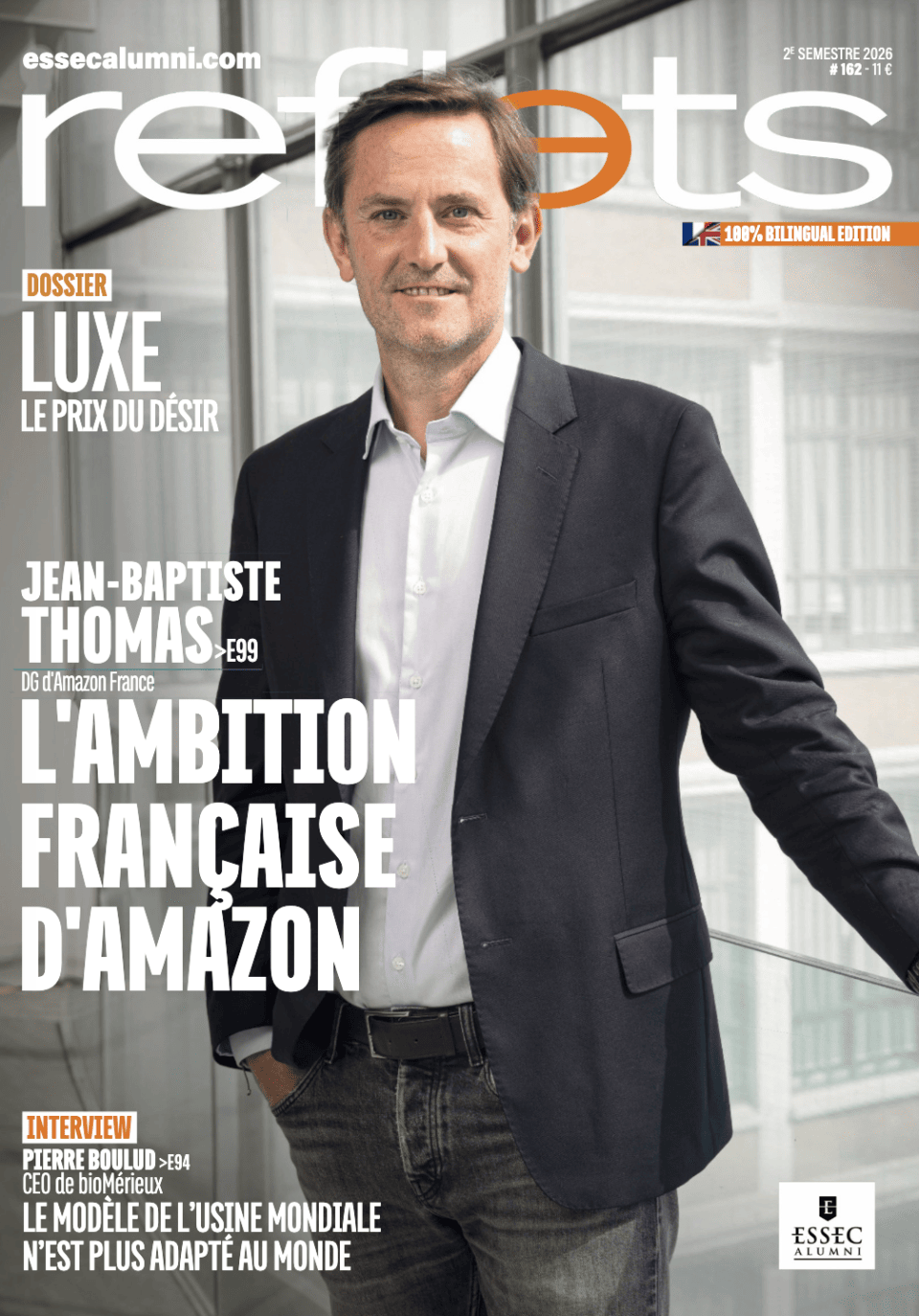
Read it now!

Comments0
Please log in to see or add a comment
Suggested Articles