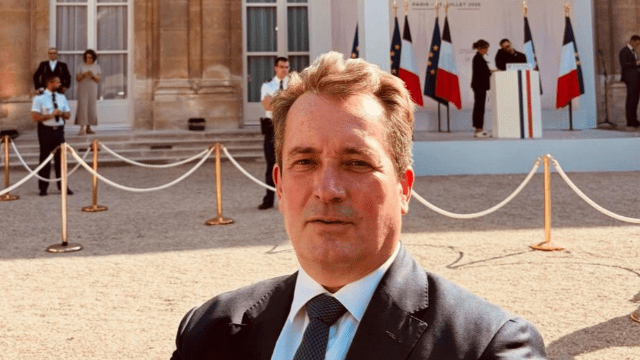
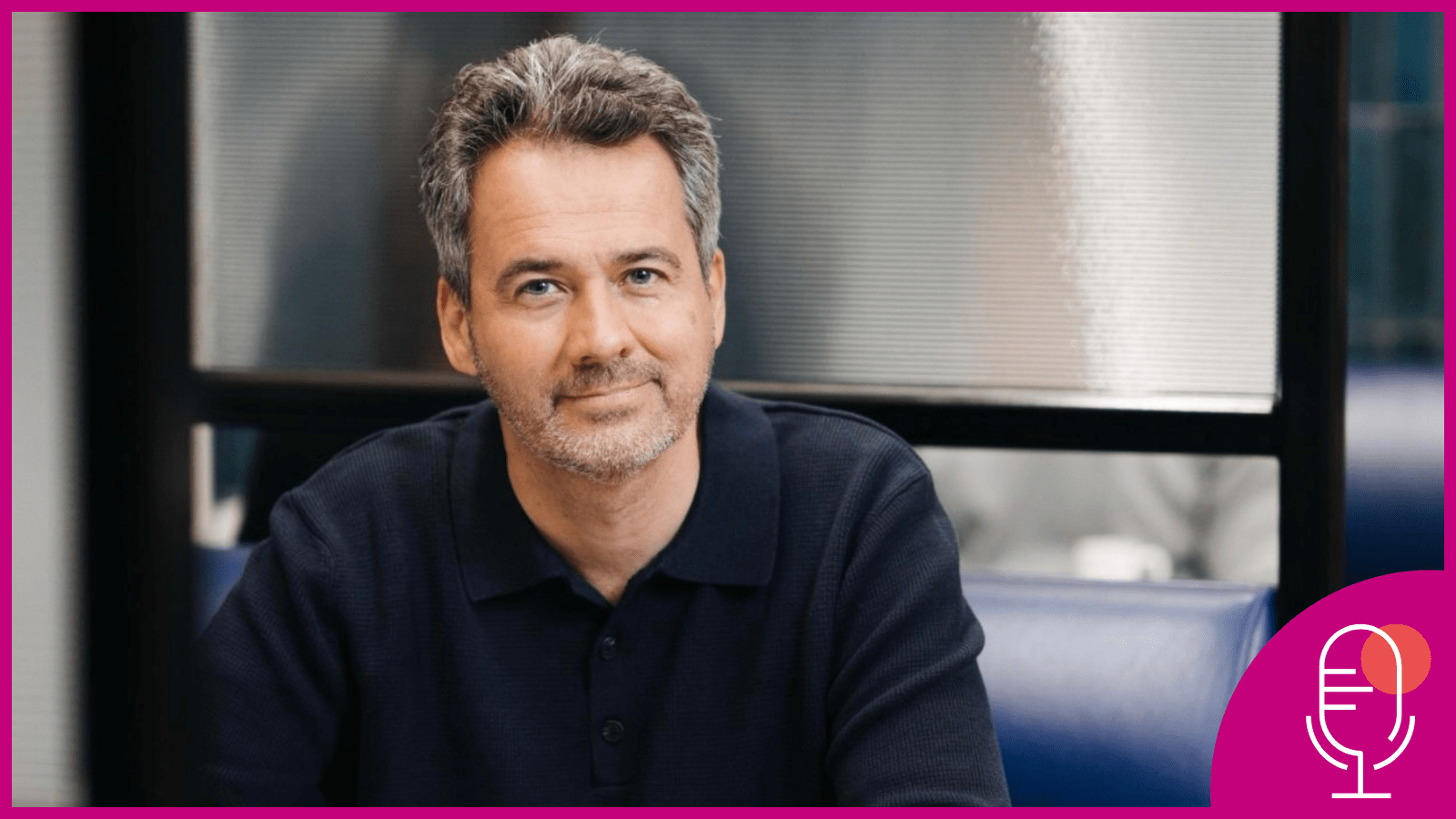
“Remaining in the Russian market was the most difficult decision I have had to make as CEO,” Vincent Warnery (E91)
Translation automatically generated.
Vincent Warnery (E91) is CEO of Beiersdorf. The German cosmetics group, founded in 1880, holds a diversified portfolio of brands, spanning mass market (Nivea), dermocosmetics (Eucerin) and ultra-premium (La Prairie). He reflects on his role as a leader in a troubled and uncertain global environment.
Risk has now become part of everyday life for business leaders. How can they stay the course in 2026?
By definition, risks are difficult to predict. Certain events – geopolitical tensions, the closure of a strait – escape all forecasting. We therefore have to adapt. Thanks to a diversified industrial base and agile solutions, particularly in freight, we manage to maintain the delivery of our products. This requires a high degree of adaptability, as well as a strong ecosystem of partners capable of rapidly offering alternatives.
And sometimes, quite simply, we are lucky. For example, products intended for the US market are manufactured in Mexico and the United States. We are therefore not affected by European surcharges.
However, we are affected by the Strait of Hormuz. We were historically very present in Iran and generated a significant share of our revenue there. Following US sanctions nine years ago, we withdrew. Now, we are suffering from the closure of the strait.
For each situation, we move forward on a case-by-case basis, guided by a clear principle: adapt without ever compromising on compliance. We do not play with rules or with risk. As a visible company, we know that an opportunistic, short-term decision could permanently undermine our credibility.
Put simply, if we cannot enter through the door, we will not force our way in through the window.
Does the current period call into question corporate neutrality? In 2026, is it necessary to choose a side?
I do not believe so. I run a cosmetics company, and my job is to sell cosmetics. I do so in the most ethical way possible, by investing in sustainable development and in people, particularly through diversity.
That said, the question arose very directly at the time of the war in Ukraine. It was undoubtedly the most difficult decision I have had to make as CEO: should we withdraw from the Russian market or remain there?
To answer this, I revisited the company’s history. Beiersdorf is a German company with Jewish roots, founded in 1880. During the Second World War, signs reading “Nivea is Jewish” were displayed on offices.
After the war, however, the group had to pay substantial reparations, notably by relinquishing the international rights to the Nivea brand.
For nearly fifty years, the group devoted its resources to buying back these rights, country by country.
It was in light of this history that I made my decision. I could not take the risk of seeing the brand slip away from us again on the Russian market. We therefore chose a middle path: significantly reducing our presence without withdrawing completely. In practical terms, we reduced the product range by two-thirds, halted advertising investments and withdrew La Prairie, a brand aimed at a clientele we no longer wished to serve in this context.
What are your main growth drivers today?
We have never been particularly strong in acquisitions. This is an area we are currently strengthening. We have a very focused brand portfolio: five in total, whereas our competitors have several dozen. In mass market, we are firmly established with Nivea. In dermocosmetics, we are experiencing strong growth with Eucerin and Aquaphor in the United States. We are also positioned in the premium segment with Chantecaille and La Prairie. La Prairie is the most expensive brand in the world, with products reaching €2,000, while Chantecaille is positioned more in the €100–150 range. We therefore have a clear interest in selectively expanding our portfolio in the intermediate space between these two premium tiers.
Beyond external growth, our main driver remains organic growth. Our brands still have significant development potential. Eucerin, for example, has grown from €500 million in revenue nine years ago to €1.5 billion today. This momentum is built on sustained work in innovation, research and development. The launch of Thiamidol, a patented ingredient targeting hyperpigmentation, is a perfect example. Introduced in 2017, it now generates several hundred million euros in revenue on its own.
What makes a brand desirable today?
There are several layers. Nivea is a heritage brand passed down from generation to generation. There is genuine loyalty to the blue tin, which remains an outstanding product worldwide: in Europe, but also in Japan and Brazil. Then there are influencers. When I graduated, we launched 30-second television advertising campaigns. Now, we have to convince influencers. Finally, expectations have evolved. Consumers are looking for products with proven efficacy, grounded in research. Whereas luxury once relied on concepts and somewhat “fluffy” promises, that is no longer the case. For us, this is very good news.
You graduated in 1991. What ties do you maintain with the school?
My ties to the school are, above all, enduring friendships. When I joined ESSEC, my goal was to prepare for the ENA. I ultimately discovered marketing, notably thanks to the late Professor Daniel Tixier, founder of the consumer goods chair. That encounter was decisive. After graduating, I joined Procter & Gamble, where I truly learned the trade. My son is also an ESSEC graduate. He made me realise that marketing is no longer the flagship subject. Today, whenever I am invited to introduce students to careers in beauty, I always make myself available. In the future, I would be delighted to help restore marketing to its former prestige.
Interview by Chloé Consigny (M07)
Full interview to be published in the next issue of Reflets, dedicated to geopolitical risks.

Comments0
Please log in to see or add a comment
Suggested Articles