
“The global factory model is no longer suited to the world of tomorrow” Pierre Boulud (E94)

[This translation was generated automatically]
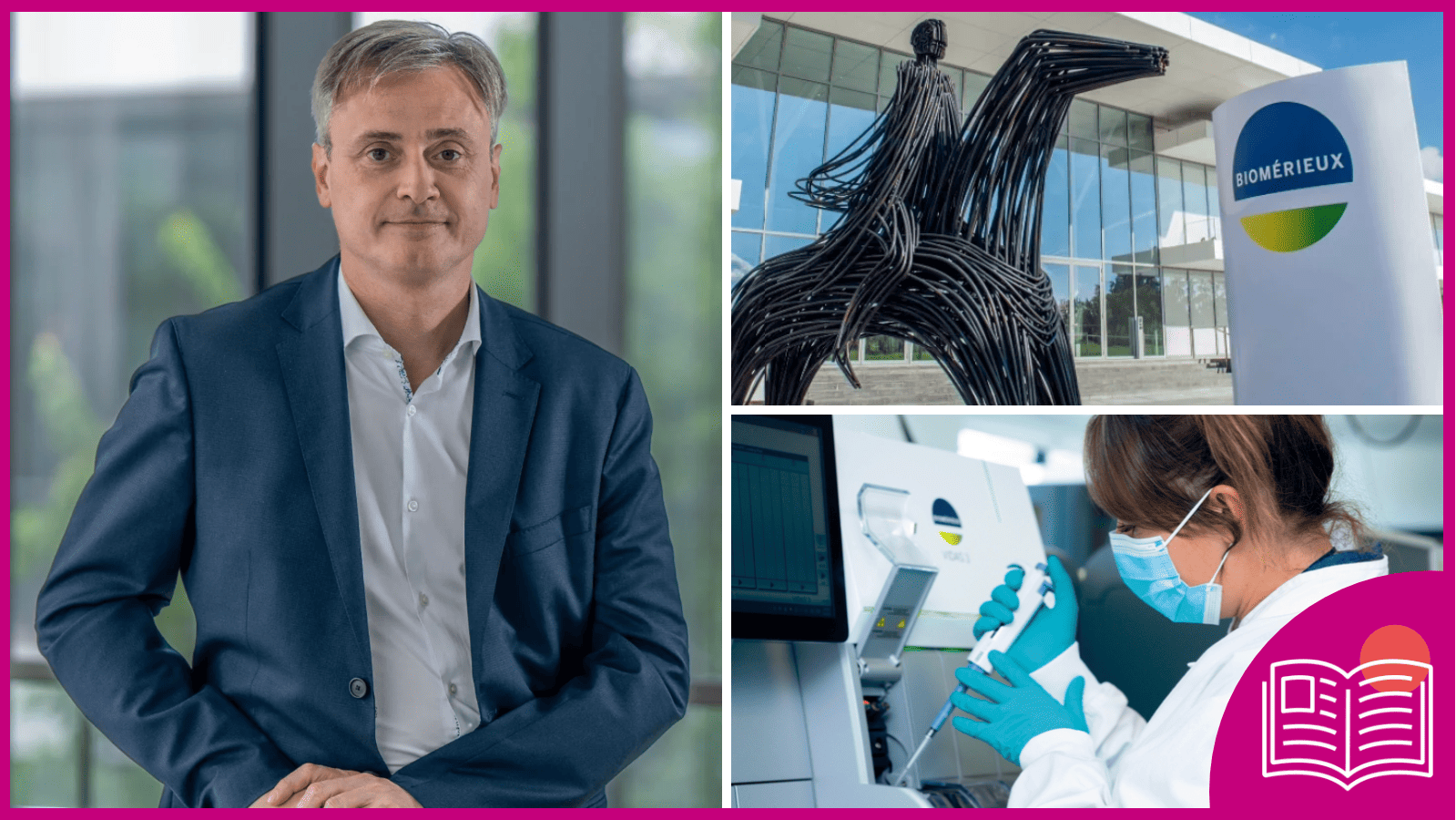
Having joined bioMérieux in Singapore at the end of 2016, Pierre Boulud (E94) has been leading its operations since July 2023, alongside Chairman Alexandre Mérieux. After a career in consulting and then pharmaceuticals at Ipsen, he now runs a company with a strong French presence relative to its turnover: nearly 4,000 employees in Auvergne-Rhône-Alpes, while France accounts for less than 7% of global sales. Governance of a listed family-owned industry leader, the economic value of diagnostics and the end of the global factory model: an interview.
Reflets Magazine: Nothing in your background suggested that you would one day lead bioMérieux. How did you get there?
Pierre Boulud: To be honest, I didn't have a career plan. I started in consulting because I didn't know which sector I wanted to focus on. During my five years at BCG, I discovered the healthcare sector, but I also realised that I wouldn't stay in consulting because I lacked the feeling of making an impact and the opportunity to manage teams. A former client called me about joining Ipsen, where I spent just over ten years: first in the Spanish subsidiary, then in global marketing. I subsequently met Alexandre Mérieux and joined bioMérieux at the end of 2016, initially taking on a role in Asia-Pacific. Three years later, I took responsibility for global clinical operations and the integration of a new company, BioFire, in the United States. By the time the Board of Directors decided to change the governance structure, I had spent six years getting to know the company.
RM: You joined through Asia-Pacific. What did you learn there that you wouldn't have discovered from Lyon?
P. Boulud: Our roots in Lyon run very deep: the Mérieux family, the company's headquarters and nearly 4,000 employees are all based in that region alone. France accounts for less than 7% of our turnover but 30% of our global workforce. By far our largest market is the United States, which represents 45% of sales; the second is China. We are an extraordinarily international company while remaining extraordinarily French – joining through Singapore was the ideal way to understand the group. In Asia, I also discovered speed: a question sent at the end of the day receives an answer the following morning. In Europe, we are no longer used to that.
 RM: The 2025 results are strong, with a significant improvement in margins. What was holding the company back before, and what risks do you see now?
P. Boulud: Alexandre Mérieux oversaw the acquisition of BioFire, which gave us access to the PCR diagnostics market, brought into the spotlight by the Covid-19 pandemic. During those years, the priority was to support growth. Once the Covid-19 situation had returned to normal, the Board of Directors asked us to focus on profitable growth. It wasn't so much that anything was "holding us back": the issue became central in a context of commercial success. We adjusted our GO•28 plan at the end of July. The target of 20% profitability at constant exchange rates in 2028 was replaced, for 2027 and 2028, by a sales growth target of 3% to 6%, accompanied by faster EBIT growth on a like-for-like basis, to better reflect market dynamics and the international environment. Regarding US tariffs, our position is unusual: 85% of what we sell in the United States is manufactured there. We are only exposed on the remaining 15%, mainly products or raw materials coming from Canada, Mexico and China. Uncertainty affects forecasts: everywhere, governments are redirecting investment towards defence and seeking to optimise healthcare spending. Valuations across the sector have fallen by 30% to 40%, and pressure is being felt on both prices and volumes.
RM: How do you adapt a group of this size to these new risks?
P. Boulud: The world has changed permanently, and climate-related and geopolitical crises are multiplying. We are therefore working to make our production more resilient. For example, we currently manufacture BIOFIRE® tests in the United States at a single factory that supplies the entire world. To secure our supply chains, we announced this year the construction of a second site in France, in Isère, closer to our European customers. The global factory model, although the most efficient, is no longer suited to the world of tomorrow. This is a long-term project: the decision was taken in 2025, the foundation stone was laid in 2026, and the first tests will be produced in 2030. It represents an investment of €250 million, committed without any certainty about what the US administration will look like in 2030.
RM: You acquire a large number of companies. Why buy rather than develop solutions internally?
P. Boulud: Our business model is built on innovation, with 12% of turnover reinvested in R&D, and our GO•28 plan aims to maintain that commitment. Acquisitions are an integral part of our innovation strategy, just like internal R&D. We acquire companies developing breakthrough solutions at the very beginning of their commercial development. What we bring is the scale and resources needed for global deployment. Take SpinChip, a Norwegian company we acquired in 2025. It had funded its registration in the European market but not the study required to enter the United States. We acquired it, launched the study, and opened up access to 50% of the global diagnostics market. Unlike pharmaceuticals, where a completed molecule does not change, diagnostic solutions are constantly evolving because viruses and bacteria mutate. SpinChip will provide a solution for diagnosing myocardial infarction directly in emergency departments, complementing our point-of-care testing portfolio.
RM: A study you funded estimates that delays in diagnosing bloodstream infections cause 3,600 deaths and cost €112 million a year. Are public authorities responding?
P. Boulud: We still have work to do to convince the authorities of the value of diagnostics. In the case of sepsis, for example (formerly known as septicaemia, editor's note), the infection spreads rapidly and the risk of mortality increases by 7% every hour. Rapid diagnosis is therefore essential, but what we bring is the scale and resources needed for global deployment. Take SpinChip, a Norwegian company we acquired in 2025. It had funded its registration in the European market but not the study required to enter the United States. We acquired it, launched the study, and opened up access to 50% of the global diagnostics market. Unlike pharmaceuticals, where a completed molecule does not change, diagnostic solutions are constantly evolving because viruses and bacteria mutate. SpinChip will provide a solution for diagnosing myocardial infarction directly in emergency departments, complementing our point-of-care testing portfolio.
RM: You are working with Oxford Nanopore on sequencing and with Mila on AI. Is diagnostics becoming a technology business?
P. Boulud: Designing a diagnostic solution means solving three problems. A biological problem: getting a reaction to work within the required timeframe. An automation problem: a laboratory is essentially a sample-processing factory, with very industrial efficiency challenges. And an interpretation problem: raw data means nothing unless it is considered in relation to the patient's condition. It is the combination of all three that defines our profession and makes us part of an industry that is difficult to replace. Generative AI nevertheless opens up genuine opportunities: we have invested in the Canadian solution LUMED™, which delivers laboratory information to clinicians when they prescribe antibiotics, helping to optimise treatments and combat antimicrobial resistance. As for sequencing, its importance can be illustrated by a concrete example: multidrug-resistant tuberculosis, on which we are working with Oxford Nanopore. The bacterium grows so slowly that traditional techniques take two to three weeks to identify the only effective antibiotic; sequencing provides an answer in six hours. That is the direction we are heading: a laboratory specialist who receives better information, more quickly, with data that has already been interpreted, becomes an active participant in the patient care pathway. Information that clinicians do not use brings no benefit to patients.
RM: Healthcare sovereignty, the IVDR (In Vitro Diagnostic Regulation, editor's note): is Europe helping or hindering you?
P. Boulud: The Covid-19 pandemic demonstrated to the authorities that a health crisis cannot be managed without diagnostics. The same applies to the Ebola outbreak currently affecting the Democratic Republic of the Congo: if it is spreading more widely than we would like, that is primarily due to a lack of surveillance. There has been progress in recognising the value of diagnostics, but not enough. Government ministries listen to us, but when tenders are issued, the tendency is still to choose the cheapest option without considering where it comes from. That is not unreasonable – taxpayers expect financial discipline, and budgets are constrained. Nevertheless, sovereignty carries very little weight as a criterion, despite the advantages of having a French industry leader. We are the world's sixth-largest player in the sector. As for the IVDR, I do not share the criticisms levelled against it: approval is now granted at European level rather than country by country, and quality controls protect both patients and reputable companies in the sector. The FDA is no less demanding, nor is China. The real issue in Europe is not approval but funding, as healthcare budgets shrink and investment shifts towards defence.
RM: Consulting and industry are two very different worlds. Which one suits you best?
P. Boulud: I often tell my teams that you need to have your eyes on the stars and your feet on the ground. You need ambition, perspective and a long-term vision, while at the same time remaining grounded, immersed in the reality of the business and its operational challenges. Focusing solely on ambition is easy; focusing solely on operations is easy too. In my view, a good manager knows how to take the intellectual lift in both directions: I think about issues five or ten years ahead, which may ultimately concern my successor, but I must also be able to come back down to the precise problem a customer is facing and which requires a solution by tomorrow morning. That is also what understanding a business means: having a detailed grasp of the operational difficulties the company encounters.
Save the date!
Pierre Boulud (E94) at the Maison des ESSEC: Tuesday 24 November – from 6.30 pm
With turnover of €4 billion, bioMérieux is one of the world's leading medical diagnostics companies. Join us to meet its CEO, Pierre Boulud (E94), who will discuss his career, the group he leads, the realities of industry and research, and the question of healthcare sovereignty. Part of the discussion will be dedicated to careers in the sector, its challenges and future prospects.
The event will be moderated by Luc Ottavioli (E89) and organised by the ESSEC Alumni Health Club.
Read the full interview in issue 162 of Reflets Mag:
Meet three ESSEC leaders (Amazon France, bioMérieux and La Poste), discover our special feature “Luxury: The Price of Desire” and explore our focus article “The Best Customer Is No Longer Human”.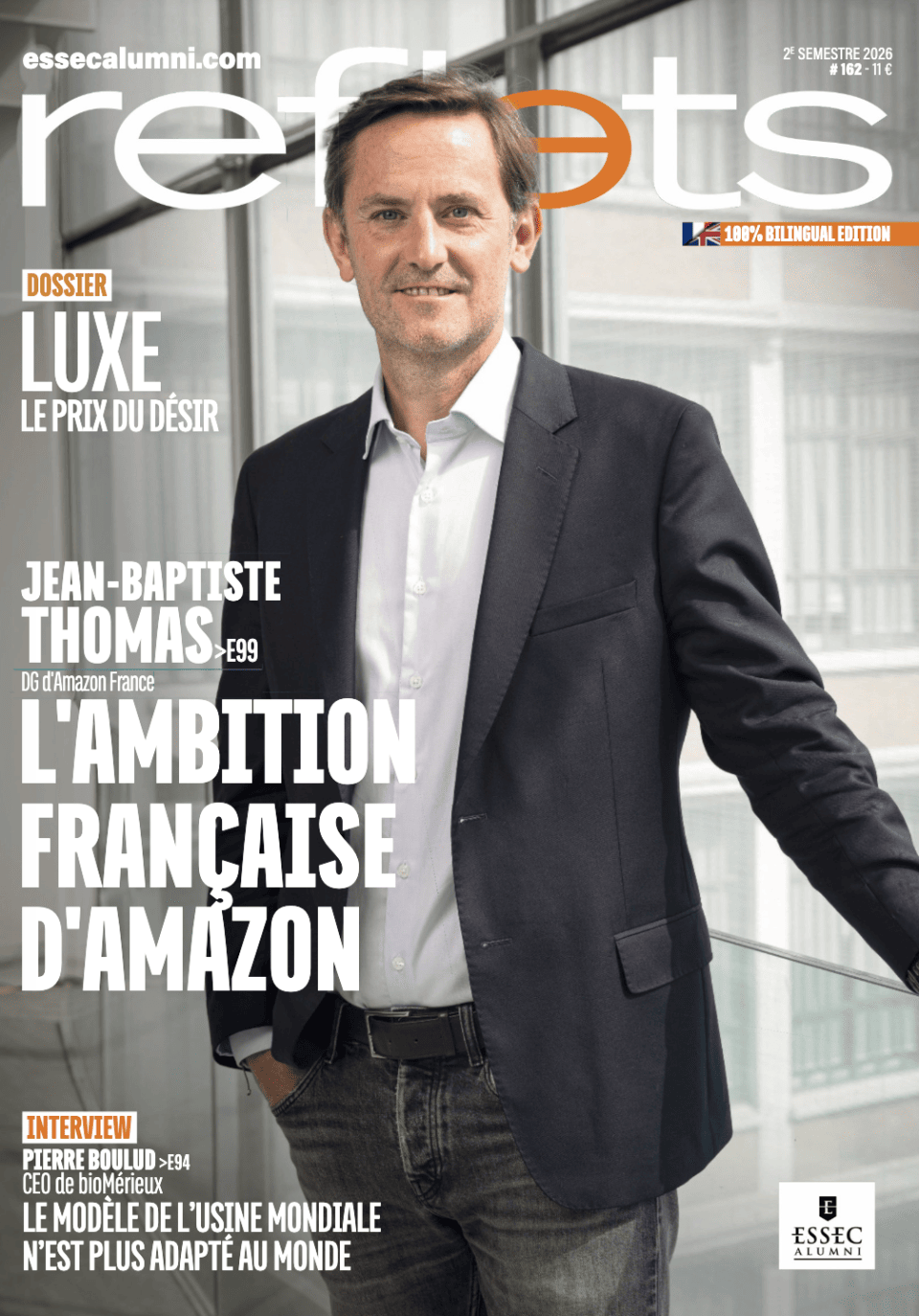
Read it now!

Comments0
Please log in to see or add a comment
Suggested Articles


