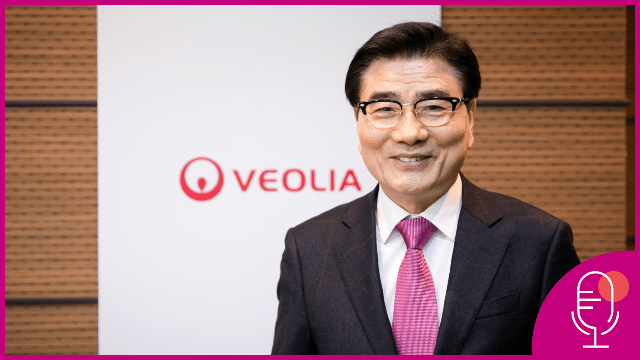

#1Month1CommittedAlumna – Helena Charrier (E12): “Addressing sustainability challenges is a financial necessity.”

03.05.2026

Helena is a leading example through her career in the field of sustainable finance.
Since 2021, she has been Head of SRI Solutions at LBP Asset Management, a European asset manager specializing in sustainable finance. She is also a member of the Climate and Sustainable Finance Commission of the Autorité des Marchés Financiers (AMF) and serves as a board member of the Forum pour l’Investissement Responsable (FIR) and its European counterpart, Eurosif.
Previously, she led the responsible investment policy of the Caisse des Dépôts Group, which she joined in 2012 as Head of SRI Projects before becoming Deputy Head of Sustainable Policies. Earlier in her career, she worked as an ESG analyst at Oddo Securities and AXA Investment Managers.
E.S.B.: What has been your career path, and what led you to become interested in CSR?
H.C.: During my university studies, I first heard about responsible investment in 2007 — in the United States! The concept immediately interested me. When I returned to France, I decided to take a specialized course on the subject (which was quite rare at the time), followed by analyst internships, and eventually joined a major institutional investor to help develop this function.
Through these experiences, I realized that the market could not truly develop unless upstream asset owners formally expressed demand for more sustainable finance.
After implementing these practices and contributing to the development of several national and international industry initiatives, I decided to move closer to the market and engage directly with the diversity of client needs and expectations by joining the Group’s asset management company.
E.S.B.: How does CSR translate concretely into your daily life?
H.C.: CSR lies at the very core of my role. My work consists of integrating environmental, social, and governance considerations into investment analysis, fund construction, portfolio monitoring, and engagement with the companies we finance, across all asset classes we manage.
This involves developing risk and impact assessment models, integrating this data into portfolio management IT platforms, and engaging with prospects and clients to explain — and sometimes co-design — these methodologies.
It also requires frequent interaction with regulators, industry associations, experts and NGOs, data providers, and other investors, notably to continue advancing innovation and standardization in market practices.
My team collaborates continuously with portfolio managers, analysts, sales teams, IT, risk management, communications, CSR, legal, compliance, HR, and reporting teams.
E.S.B.: How do you define CSR?
H.C.: At LBP AM, CSR is embedded in a double materiality approach, encompassing both financial and impact dimensions.
We have established a transparent common framework of policies — covering climate, biodiversity, and human rights, and tailored by practices and sectors — which applies across all our funds. For a significant portion of our product range, we reinforce this framework with additional practices, allowing us to offer a spectrum of solutions: from funds that aim to “simply” integrate sustainability risks effectively within diversified portfolios, to more targeted thematic funds designed to deliver positive societal impact.
E.S.B.: How can CSR act as a business catalyst, and what type of ROI can it generate?
H.C.: Although sustainability has recently become less prominent in certain narratives — and even in some practices — particularly among companies with significant exposure to the United States facing a highly political “ESG backlash,” it would be a mistake to view sustainable finance as a passing trend now overshadowed by short-term return priorities or sovereignty concerns.
In Europe, demand from institutional investors remains strong, as they incorporate sustainability-related financial risks within their fiduciary duty and clearly understand the connection between the energy transition and economic sovereignty.
Far from declining, the expectations of our major clients continue to increase, with a growing demand for customization (which criteria should be considered and how) and greater accountability (regarding the detailed operational integration of these issues and their financial and societal impact).
As a result, the ability to meet these needs remains critical. Our commercial success depends on how our human and technical resources, our SRI expertise, and their tangible impact on portfolio management are perceived.
Demand is naturally less structured among retail savers, who are still relatively unfamiliar with SRI products. Labels aim to provide them with simple and reliable signals. However, it is also essential to regularly train financial advisors — something our parent company, La Banque Postale, actively supports in partnership with our teams.
E.S.B.: What message would you like to share with ESSEC Alumni and members of the Club?
H.C.: As in many sectors of the real economy, the current challenge for responsible finance is managing the tension between geopolitical instability — and, by extension, political uncertainty — and the need for economic actors to rely on clear policy direction and stable regulatory frameworks in order to properly plan the sustainable transformation of their activities.
In this still insufficiently coordinated phase, ESG investors are among the strongest allies of CSR directors. Engaging with them and providing reliable reporting is a worthwhile investment when CSR practices are robust — or genuinely under development.

Comments0
Please log in to see or add a comment
Suggested Articles