
#1Month1CommittedAlumnus Cédric BAECHER E(00) – “Sustainable transformation is entering a new phase: the execution phase.”

04.05.2026
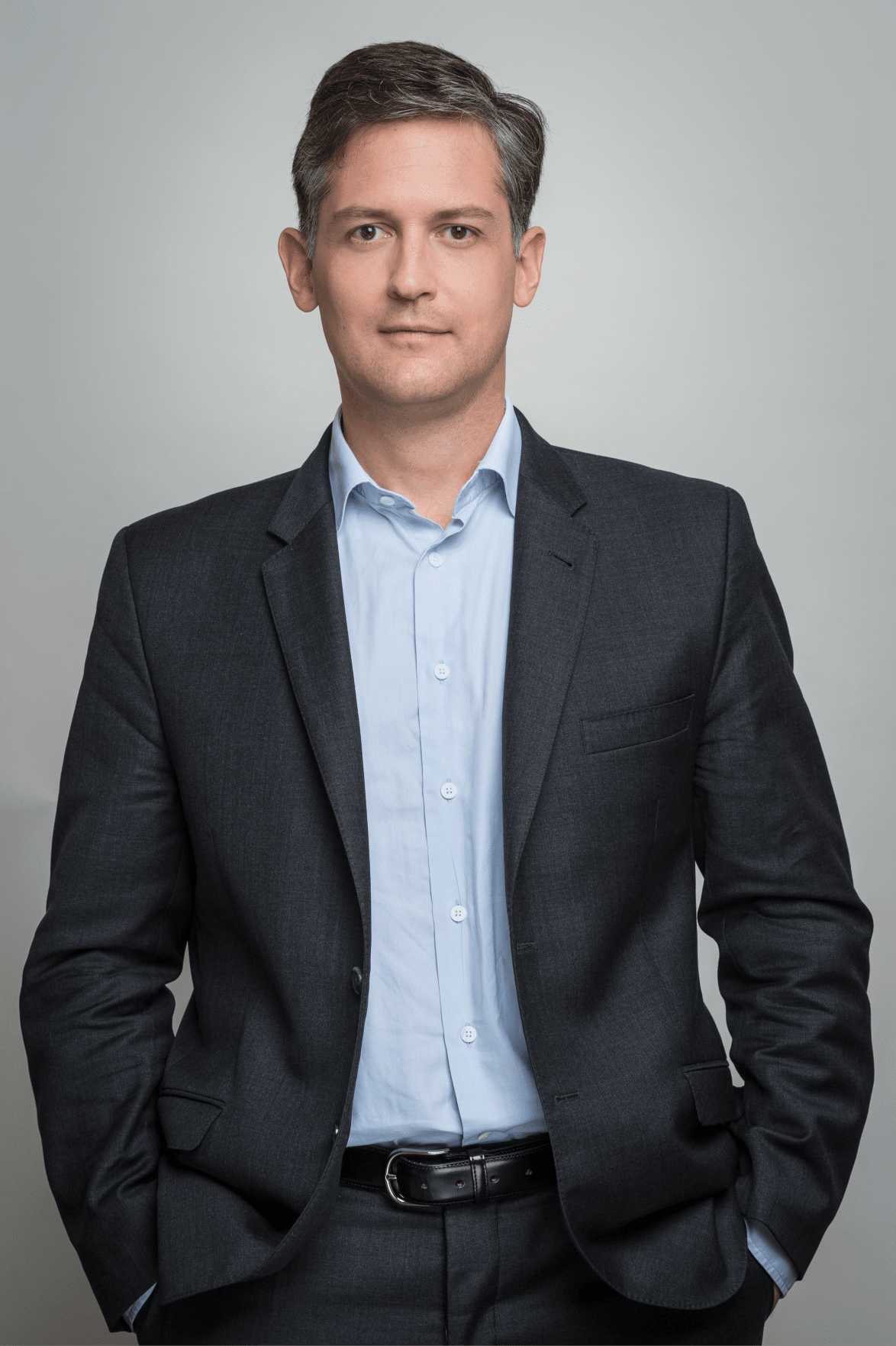
A graduate of ESSEC’s Class of 2000, Cédric is a Partner at Wavestone, where he co-leads the teams dedicated to sustainable transformation. He is also a Foreign Trade Advisor to France (CCE Paris office), an independent expert on energy, climate, and innovation for the European Commission, a CSR expert within the Association Progrès du Management, and a citizen reservist in the French Navy (auditor at the Institut des Hautes Etudes de Défense Nationale). Before joining Wavestone, he was an entrepreneur for 20 years and co-founded Nomadéis in 2002 (one of the first French consulting firms specialised in CSR, acquired by Wavestone in 2022).
E.S.B.: What is your background, and what led you to take an interest in CSR?
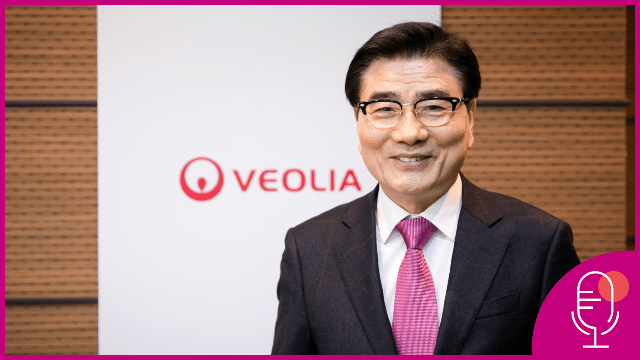
C.B.: After graduating from ESSEC, I first launched, with three classmates (whom I met through the Junior Enterprise), a nonprofit project (“AQUA tu penses?”): a one-year round-the-world journey focused on water and sustainable urban development. We received support from Jean-Marie Messier (then head of Compagnie Générale des Eaux, now Veolia), UNESCO, and the economist and writer Jacques Attali.
After this fascinating and formative research journey, I co-founded Nomadéis in 2002, one of the first French CSR consulting firms. Initially, we focused on managing scarce resources (water, energy, etc.), considering both business impacts and philanthropy, as well as partnerships with the UN and international solidarity organisations. Veolia became our first client, followed by other companies (Essilor, Hewlett-Packard…) and public institutions (local authorities, ministries, technical agencies).
Over the past 20 years, our offering has continued to expand to include bioeconomy, sustainable mobility, sustainable construction, and environmental health. We carried out projects in more than 70 countries. We sold Nomadéis to Wavestone in 2022 to accelerate our growth and better meet evolving market expectations.
E.S.B.: What does CSR look like concretely in your life?
C.B.: CSR has been the common thread throughout my career since leaving ESSEC. I’ve experienced it daily (for nearly 25 years) as both a fascinating lens and a relevant framework for understanding economic, political, and social dynamics.
Over the past two to three years, I’ve become particularly interested in the links between CSR, geopolitics, power, and sovereignty. After several assignments for the Ministry of Defense, this led me to complete the IHEDN auditor program and become a French Navy reservist, where I contribute to expert groups, particularly on the links between security and climate.
That said, I have never been—nor wanted to become—a CSR “guru,” either professionally or personally. Despite the carbon footprint impact, I travel extensively around the world because I strongly believe in the importance of intercultural dialogue and the humility required in CSR work. We must move beyond a purely French—or even Eurocentric—perspective to understand how global CSR issues are perceived and addressed locally across the world.
E.S.B.: How do you define CSR?
C.B.: I see three essential and inseparable dimensions:
1. The footprint of economic activities, which must be recognized, measured, and continuously optimized—both for business continuity and in response to growing regulatory and societal pressures.
2. Innovation in products and services, across all sectors: how can I differentiate and create more value tomorrow while responding to evolving market expectations? Where are my opportunities for differentiation?
3. Reputation management, both internally and externally with stakeholders. This includes anticipating crises, integrating intercultural dimensions, evolving perceptions, intergenerational issues, and even strong ideological positions.
In short, my definition of CSR is above all pragmatic and concrete.
E.S.B.: How is it a catalyst for business, and what kind of return on investment does it generate?
C.B.: I believe CSR is not just a catalyst for business—it is fundamentally part of the business itself, embedded at the core of the business model (operational continuity, talent attraction and retention, innovation and market differentiation, ESG criteria for access to financing, etc.).
The issue goes far beyond return on investment. It’s about the ability to enter a new paradigm to remain relevant and avoid being overtaken by competitors and constantly evolving markets.
There is also a strong parallel with digital transformation, which began decades ago and now impacts all functions, entities, and roles within companies. The same dynamic applies to sustainable transformation: beyond CSR or impact departments, our clients today include procurement, finance, marketing, operations, HR, IT, and business units.
Interactions between digital and sustainable transformations are accelerating (responsible digital, ESG data systems, etc.). We must address both “Green IT” and “IT for Green”—technology serving sustainable transformation.
E.S.B.: What would you like to say to alumni engaged in Alumni ACT and similar initiatives?
C.B.: First, adopt as broad, transversal, and interdisciplinary a vision of CSR as possible. I now prefer to speak of sustainable transformation, which mobilizes not only CSR expertise but also HR (skills development, social data, project-based management) and, above all, change management.
For a long time, CSR in companies relied on a small group of committed experts—pioneers in their fields. Today, scaling up requires speaking to everyone and mobilizing thousands of employees, helping them understand the challenges and the concrete role they can play in their daily work.
Finally, in the age of AI, it is essential to consider the complex interactions between AI and CSR—both in terms of the solutions AI can bring to accelerate the transition, and the new social and environmental impacts that must be anticipated and managed.

Comments0
Please log in to see or add a comment
Suggested Articles