Discussion with Nicolas Dufourcq, Chief Executive Officer of Bpifrance
This translation has been generated automatically.
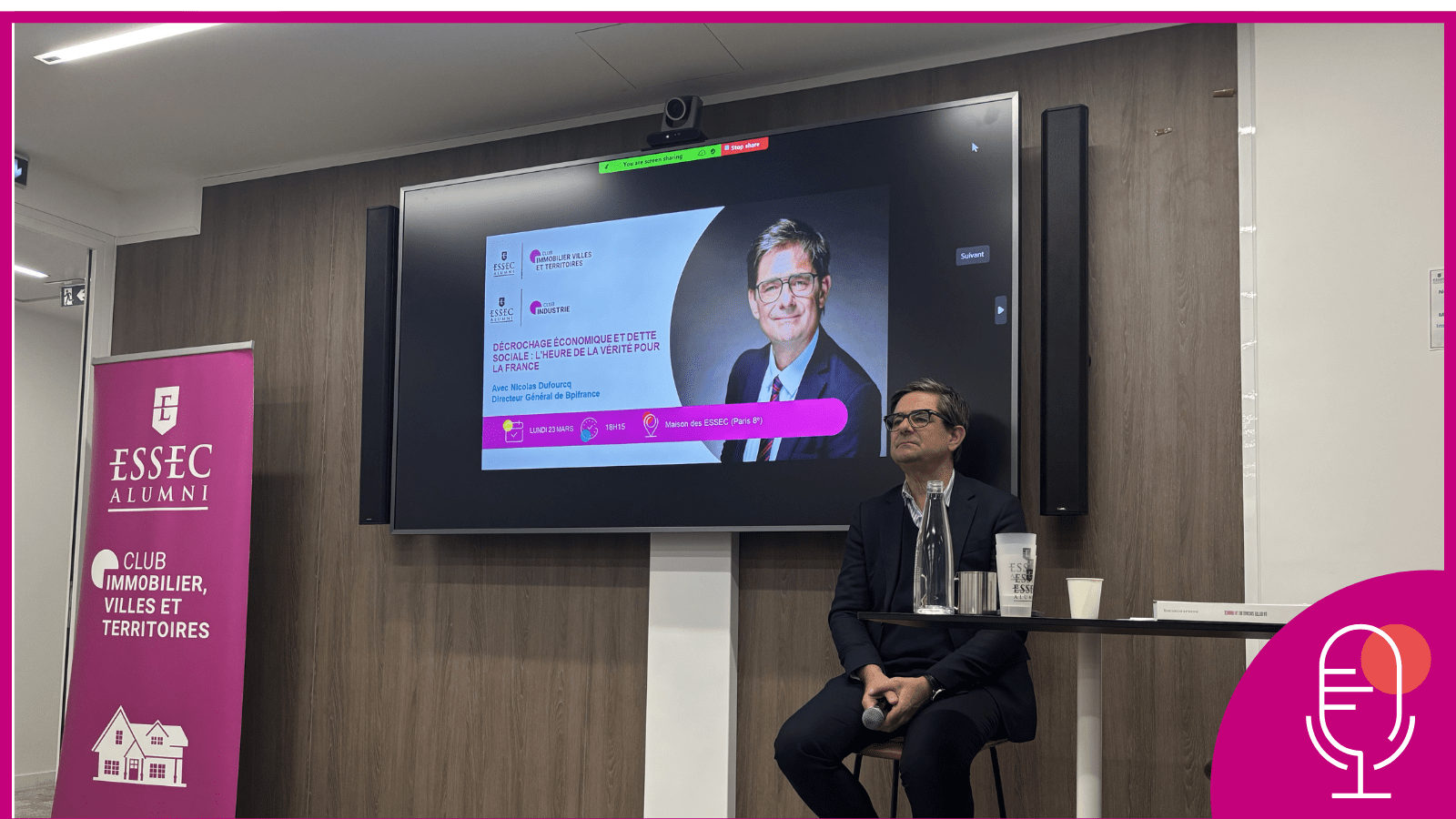
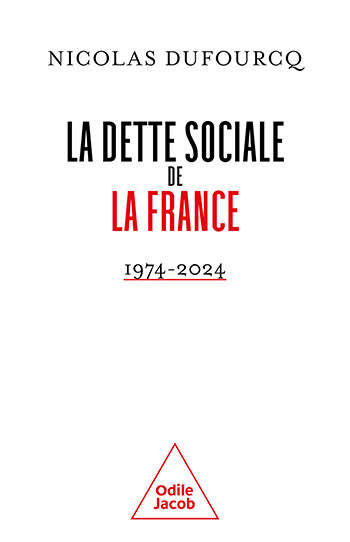
On the occasion of the release of his book, The Social Debt of France, published by Éditions Odile Jacob, Nicolas Dufourcq, Chief Executive Officer of Bpifrance, was invited to the Maison des ESSEC.
An event organised by the ESSEC Alumni Real Estate, Cities and Territories Club, in partnership with the ESSEC Alumni Industry Club, and moderated by Edouard Dequeker, Professor at the ESSEC Chair in Urban Economics. Selected highlights.
“The family secret of French society is not debt. Everyone is aware of its existence. What is less acknowledged is that it is social. Two-thirds of France’s public debt finances social benefits. It is consumer credit rather than an investment in France’s future or in its defence against external threats. It pays the monthly bills of millions of our fellow citizens,” Nicolas Dufourcq notes in the introduction to his book.
Alumni and students gathered on Monday 23 March at the Maison des ESSEC to listen to and engage with the head of the public investment bank. He first reflected on the origins of his book. “I realise that my books are primarily written to answer my own questions. As the head of Bpifrance, I was unable to answer a simple question: what exactly makes up France’s debt? I therefore delved into the public accounts and conducted around fifty interviews with politicians, economists, trade unionists, philosophers and civil servants.”
His investigation covers the period from 1974 to 2024. “Under François Hollande and Michel Sapin, there was still a vague memory of the notion of fiscal discipline. However, from the ‘gilets jaunes’ crisis onwards, everything faded. We entered uncharted territory where no one speaks of budgetary discipline anymore. This shift began with the ‘whatever it takes’ approach and continued with the ‘tariff shield’.” A way of operating that would have been considered unacceptable in the 1980s and 1990s, when he was a student.
 Denial of reality
For Nicolas Dufourcq, any discourse grounded in truth has become inaudible today, both among citizens and public decision-makers. “We are a society still frozen in the imagination of the 1960s and 1970s, clinging to illusions.” The French denial stands in contrast to the attitude of other European countries. “In Northern Europe, countries have undertaken significant efforts to curb the drift of public debt. In Germany, for instance, the years following reunification were difficult for the population.” Southern European countries, for their part, have also carried out this work, often under constraint, as in the case of Greece. For the head of Bpifrance, it is in France that the taboo persists. “France must manage to create value in proportions comparable to the protections it has put in place,” warns the author, who concludes his book with twelve pages listing social benefits.
Otherwise, France will have to drastically rethink its standard of living. He concludes: “The only source of light today is value creation driven by entrepreneurs,” while lamenting that the amounts allocated to innovation remain “insufficient in relation to the scale effect required to compete with countries such as China.”

Comments0
Please log in to see or add a comment
Suggested Articles