Visionary Award 2026: Julien Bonneville (E06), The Making of a Success
Translation automatically generated.
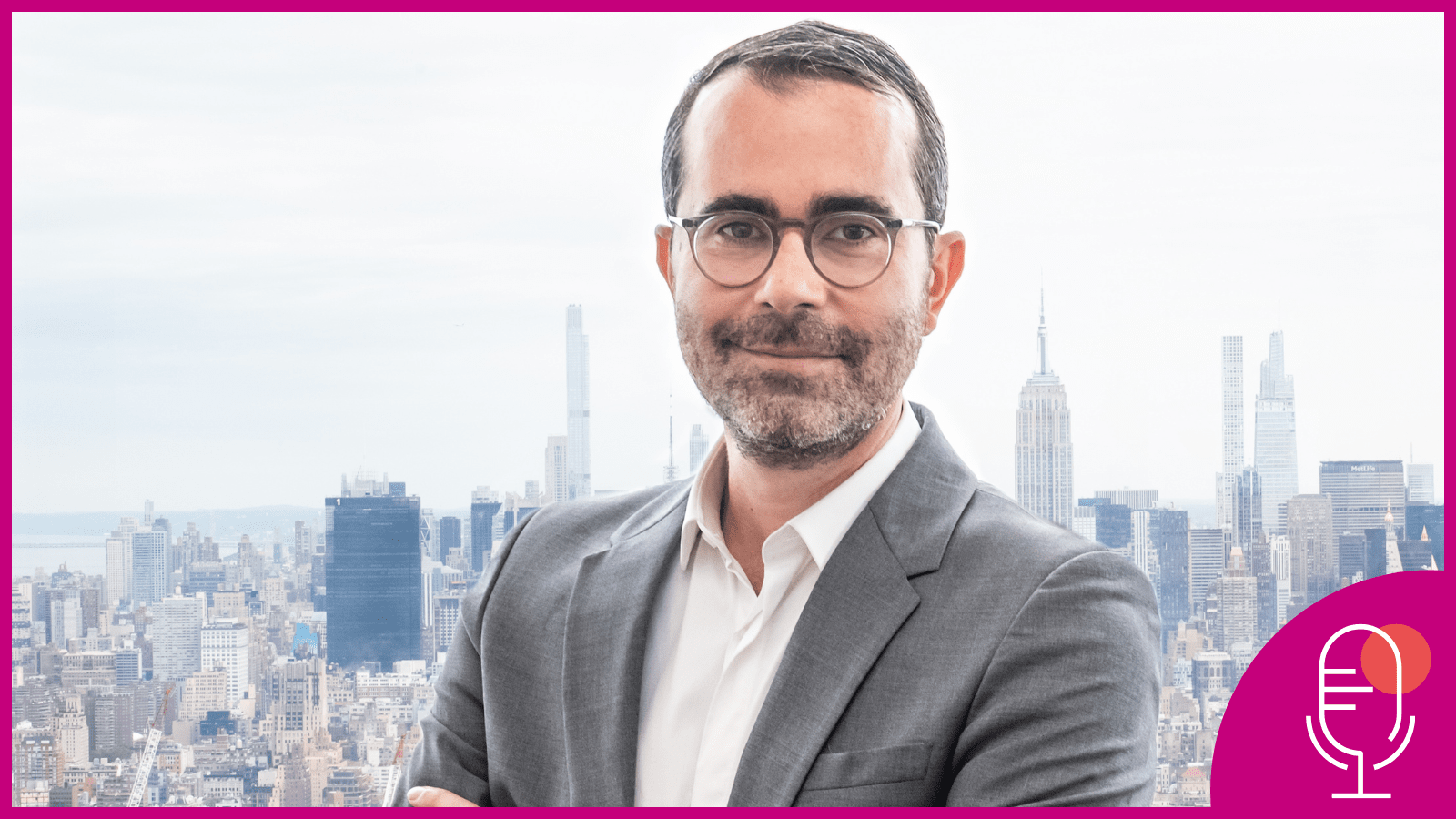
Long convinced he was “hardly employable”, Julien Bonneville (E06) ultimately forged his own path. Based in New York, he founded TheGuarantors in 2015, a fintech offering rental guarantees that protect landlords against the risk of unpaid rent.
Today, TheGuarantors generates $250 million in revenue and employs 450 people across the United States. Within a decade, the company has become a near-unicorn. This trajectory was reinforced in March 2026 with the announcement of a majority stake acquisition by New York-based private equity firm Warburg Pincus.
On 20 May in New York, Julien Bonneville (E06) will receive the Visionary Award 2026 at the ESSEC Gala.
“In just a few years, I went from being a post-graduate consultant considered difficult to employ to becoming semi-retired,” Julien Bonneville quips. While he now celebrates the scale shift achieved by TheGuarantors, as its model becomes increasingly adopted by major US real estate groups, he remains mindful of the journey behind him.
Because behind this rapid trajectory, nothing was linear. Every fundraising round was an ordeal. “You have to imagine what fundraising involves. For me, every attempt was brutal. These periods are real tests of resilience, sometimes involving 50 to 60 rejections before managing to syndicate a round. It’s often a turbulent process that is rarely mentioned by successful entrepreneurs. At seed stage, it is particularly gruelling.”
He found initial backing from European investors, including Partech, Alven, White Star Capital and GFC.
Beyond investors, he also had to convince insurers to underwrite the risk. To do so, he relied on his early years in consulting. “It was a fairly tough experience but extremely useful. I knew how to produce very polished slides, which is actually quite rare in companies. At the time, it was practically my only source of credibility with insurers, as I had no background in either insurance or real estate,” he explains.
A knife to his throat
It all began in 2015, with an idea—but also a personal constraint. After two years in a consulting firm, he found himself unemployed and saw his US work visa expire. Launching a company to secure an investor visa became a necessity. He recalls: “I had a knife to my throat. Starting my company was the only way to remain in the United States.”
The idea itself, however, dates back further. It first emerged five years earlier, when he was a student at Columbia. “I didn’t want to live on campus, so I tried to rent a flat.” But for a foreigner, accessing housing is complex—largely due to the “credit score”, a credit history essential to reassure landlords. “Many foreigners moving to the United States simply don’t have one,” he explains.
From this personal experience came the founding intuition behind TheGuarantors: offering rental guarantees to individuals whose applications are rejected by landlords due to insufficient income or lack of a credit score. A mechanism that secures landlords while opening up access to housing for previously excluded profiles. The solution addresses a deep market: in the United States, 20% of renting households do not meet standard criteria.
As a result, ten years on, TheGuarantors covers more than 3.5 million rental units for major property management companies across the United States. The group continues to post annual growth of 60%.
He attributes this development to strong unit economics and a resolutely profitability-focused approach from the outset. “It has been a disciplined, somewhat European approach, with an early focus on strong yet profitable growth—unlike many competitors who raised three times as much but have since gone bankrupt,” he explains. A mindset he says was partly shaped during courses taught by the Hayat brothers within the Entrepreneurship track.
For now, he is reflecting on the speech he will deliver at the Visionary Award ceremony. Among the career advice he wishes to share with young graduates: “be flexible, agile, and truly resilient”. In his view, two experiences help build that resilience: going through preparatory classes and gaining experience in a highly demanding environment such as consulting.

Comments0
Please log in to see or add a comment
Suggested Articles