"Life is shaped by unexpected twists", A conversation with Laurence Fischer (E05)
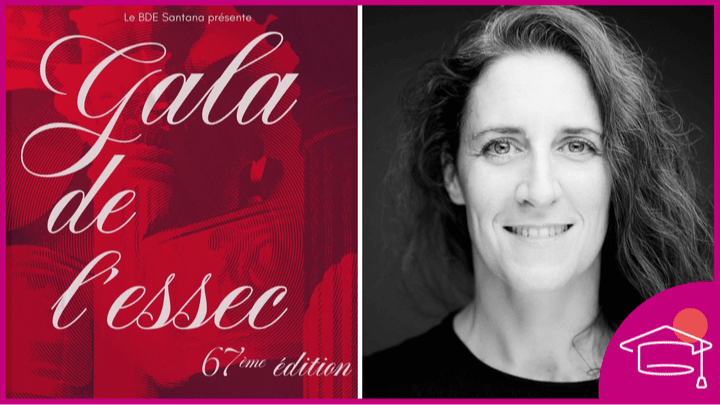
A three-time world karate champion, a graduate of ESSEC’s Grande École programme (MSc in Management) and the International Chair in Sports Marketing, Laurence Fischer (E05) has been chosen as the patron of the 2026 Gala. She sees this as “an honour, but also a symbol. Through my journey, students have recognised a way of engaging with the world and a willingness to step aside from the expected path.”
An interview.
Your career combines elite-level sport, NGO engagement and experience within major international groups. What is the common thread across all your experiences?
The common thread running through all my experiences is undoubtedly people. My journey is the result of hard work, but also of encounters. I had the privilege of choosing what I wanted to do. In the background, sport has always been very present. I remain convinced that sport is a powerful driver of health, well-being and even “living together”, even if the phrase may feel somewhat overused today.
What do you take away from your experience in the corporate world?
Unsurprisingly, I chose to work in a company connected to sport. When I joined Nike, I had just ended my career as an athlete. I wondered whether my experience would be transferable. In a company like Nike, there is a very strong narrative and identity. At the same time, business requirements are highly demanding. In the end, it was very much aligned with what I had learned at ESSEC.
Within Nike, you worked in the women’s division. What was the strategy at the time?
We were at the very beginning of developing clothing lines dedicated to women. It is important to remember that at the start of my career as a karateka, we were given the leftover kit from the men. I remember, for instance, receiving an XL outfit. Today, I can see how far things have come. Equipment manufacturers now take body shapes into account. Clothing is adapted for women, including pregnant athletes and those who wear the hijab. I appreciated this approach, which also went hand in hand with promoting French athletes.
Your journey is marked by your commitment to women’s rights. What were the key turning points?
On a personal level, I have never experienced violence or discrimination. However, I quickly became aware of inequalities in sport. For example, when I ended my athletic career in 2006, there were only three weight categories in women’s karate, compared with five for men.
My first turning point came in 2005. As part of one of my ESSEC courses, I got involved with Sport Sans Frontières (now Play International, Ed.). I travelled to Kabul to train teachers in sport and, in particular, to teach karate. This experience was an initial awakening to inequality. Women who took part in sport sometimes did so at the risk of their lives. I believe that life is made up of encounters and unexpected turns. The second turning point came later, in 2013. At the World Forum for Francophone Women, I met Dr Denis Mukwege, a gynaecologist specialising in reconstructive surgery in the Democratic Republic of the Congo. In that country, rape is used as a weapon of war. Repair is essential. It involves surgery, but also the body and the mind.
In 2017, you founded your NGO, Fight for Dignity. What is its mission?
In 2010, I ran the Peace Marathon in Burundi, a highly symbolic race bringing together many committed athletes. I met the founders of Maison Dorcas, a centre supporting women who are victims of gender-based and sexual violence. The centre adopts a holistic approach to trauma, with programmes dedicated to post-operative survivors. Fight for Dignity was born from listening to these women. Through simple karate exercises – not self-defence techniques – we help them reconnect with their bodies. Today, we have trained 26 instructors, 19 of whom are working in France.
It is important to understand that one in three women worldwide has experienced physical or sexual violence. These women are survivors: without their trauma response mechanisms, they would not have survived. Sport must be made accessible to them, because it works.
Non-judgement, kindness and consent are fundamental values of sport; they are also essential in the process of recovery.
You are the patron of the ESSEC 2026 Gala. What does this role mean to you? What message would you like to share with students?
I am very honoured by the students’ choice. I see it as recognition of an atypical path, one that shows it is possible to follow different routes while remaining committed and high-performing. I would encourage them not to limit themselves to an “expected” path. It is possible to combine professional ambition, entrepreneurship and a commitment to the common good.
What I appreciated at ESSEC was the diversity of profiles and the freedom of trajectory. That is a real strength. My message is simple: dare to take a step aside when it feels right.
ESSEC Gala 2026 – 18 April 2026 – InterContinental Paris Le Grand
Reservation

Comments0
Please log in to see or add a comment
Suggested Articles